欢迎来到 [中博国际展览官网]
, 进入
2027宁波国际文具展
Today, more and more adults are buying toys. From comforting plush toys to sought-after blind boxes that are hard to find, to creative DIY miniature scenes, and the recently viral Perler beads… countless adults are enthusiastically spending on designer toys and collectibles, turning one product after another into a breakout hit.
Media reports show that the “designer toy boom” has continued to heat up in recent years. Data reveals that in 2025, total retail sales of trendy and collectible toys reached 67.69 billion yuan, a year-on-year increase of 45.4%. For comparison, total domestic retail sales of conventional toys (excluding designer toys) stood at 103.53 billion yuan the same year, up just 5.8% year-on-year.
A survey by the China Toy & Juvenile Products Association of key toy retailers in first-tier and new first-tier cities found that nearly one in four offline toy stores reported that designer and collectible toys were their fastest-growing category by sales. Meanwhile, 14.5% of respondents identified such toys as the category that most boosted their gross profit margins.
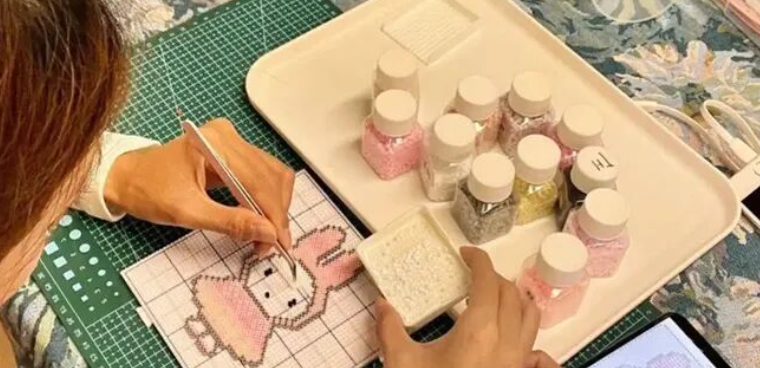
Why are adults so drawn to toy consumption? It is certainly not simply a case of “holding onto childhood innocence.” Take Perler beads, for instance: for just a few dozen yuan, people can create freely with no time limit, arranging tiny colored plastic beads into unique patterns or 3D ornaments. More than the final product, the process of experiencing flow and a sense of control, as well as unleashing creative energy, is what captivates people.
Unlike traditional toy purchases, which focus on practicality and educational value, toy consumption among “big kids” is more a form of self-compensation. It revives fond childhood memories, relieves stress and anxiety, grants temporary peace and relaxation amid the pressures of real life, and carves out a private “mental sanctuary.”
Through buying these toys, adults also shape their personal identity and express their individuality. Using toys as “social currency,” they build connections with others who share the same interests, achieving a higher form of social recognition. Precisely because toys deliver such strong emotional value, consumers are often willing to pay a significant premium.
This new trend in toy consumption brings fresh opportunities for industry growth. On the demand side, consumption upgrades driven by emotional value have expanded room for industrial development. Additionally, adult toy buying shows a clear “collection and cultivation” trait, with many consumers and collectors eager to build out entire IP universes. This lays important groundwork for in-depth IP development and the creation of new consumption scenarios.
On the supply side, China boasts a complete toy manufacturing chain and a highly flexible supply network, enabling rapid responses to market demand. The continuous rise of original domestic IPs and the “China-chic” cultural trend has also strengthened the cultural identity and influence of local products. The mutual reinforcement of supply and demand has created powerful momentum for industrial upgrading.
Nonetheless, to seize these new development opportunities, the industry must remain alert to problems such as homogeneous competition. Whenever one toy goes viral, a flood of low-quality imitations quickly floods the market. This not only disrupts market order but also shortens product lifecycles and dampens companies’ enthusiasm for research and development.
Furthermore, some platforms use excessive marketing and artificial scarcity to push consumers into impulsive purchases of emotional goods and services, which harms the industry’s long-term health. For the toy industry to “play” its way into a new era of success, it must stay committed to long-termism.
Declaration: This article comes from Guangming Online Commentary. If copyright issues are involved, please contact us to delete.

 12
12